




Tungsten Rods
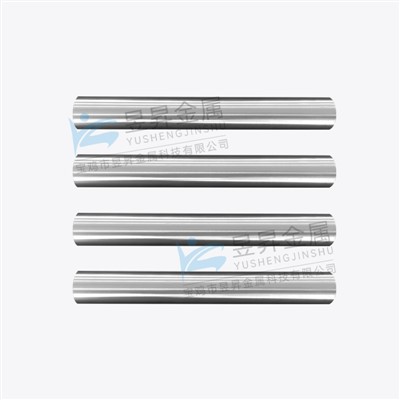
Tungsten Rod , purity≥99.95%, for laboratory, school education and research use. Tungsten is a silver-white shiny metal with a very high melting point (3410±20°C), high hardness, low vapor pressure, low evaporation rate, and stable chemical properties.
Advantages of Tungsten Rods
Enhanced durability
The strength of tungsten rods is unmatched. Unlike other metals, tungsten does not break, and it rarely corrodes. Thus, the material is suitable for infrastructure and construction projects requiring strength and durability, such as bridges and highways.
High melting point
Tungsten rods have the highest melting point compared to other metals. They can withstand extreme heat levels during welding, ensuring excellent structural connection. Their superior properties make them ideal for constructing pipe fittings and parts that require welding, such as gas pipelines.
Resistance to wear and tear
Pure tungsten rods have a high resistance to wear and tear compared to other metals. They can resist impact better than other metals. Thus, they are suitable for constructing mechanisms subjected to friction and wear, such as drilling tools, saw blades, and heavy machinery drill bits.
Reliability
Tungsten rods have a longer lifespan than other metal materials. They are strong and durable and can withstand harsh weather conditions. Their reliability and superior mechanical properties make them suitable for constructing high-tech infrastructure and buildings.
Cost-effectiveness
Though tungsten rods are relatively expensive compared to other materials, they are cost-effective in the long run. You will save money with unmatched durability, resistance, strength, and reliability, as they will require minimal repair and maintenance, making them ideal for critical and complex infrastructure projects.

Why Choose US
Our Factory
Baoji Yusheng Metal Technology Co., Ltd. is a professional manufacturer. It is a high–tech enterprise integrating the processing, production, technology, research and development rare metals as well as sales. It's located in Wen quan village Industrial Zone, BaoTai Road, Gaoxin Development Zone, Baoji City, Shaanxi Province.
Company Equipment
We have 350KW electron beam bombardment furnace, 2000T hydraulic press, 1700mm vacuum annealing furnace, one 42KW and two 15KW fine forging machines, 14-roll fine foil rolling machine, LDD120, LDD-40, LDD-15, LDD-8 double line pipe rolling machine. 2-roll 500T open billet mill, 4-roll cold rolling machine, 6-roll cold rolling machine, 15KW double-sided drawing machine, cylindrical grinding machine, skinning machine, surface grinding machine and a series of other equipment.
Professional Team
The company has many years of experience in technology with a high-quality work team, can timely provide customers with perfect after-sales service .Professional qualifications, to create brand is Yusheng's business objectives. excellent quality, reliable price is the Yusheng's business purposes.
Rich Experience
Seek progress through innovation, Seek development through win-win cooperation is our production and business philosophy. The full implementation of 6S management to ensure consistent and stable product quality.

Tungsten Heavy Alloy Rod (WNiFe/WNiCu Rod)
The liquid-phase sintering process creates a tungsten heavy (also known as "high density") alloy rod. This rod is 85-99% pure tungsten. In addition to its extremely high density (16.5g/cc to 19.0g/cc), tungsten heavy alloy rod is coveted for its superior strength, less thermal expansion, and easier machinability than pure tungsten rod.
Tungsten copper rod (W Cu Rod)
Tungsten copper rods have excellent conductivity and resistance to electrical erosion. While the infiltrated copper has a special cooling effect, when working temperatures reach as high as 2000°C, the rod relies on the tungsten skeleton structure to give it strength. A tungsten copper rod is produced using the infiltration sintering process in a fractional range of W Cu 50/50 to W Cu 90/10. Due to their unique variances in melting point, density, and numerous other physical characteristics, tungsten and copper cannot be combined. Different metal component ratios will create specific physical and mechanical qualities.
Lanthanated tungsten rod (W La Rod)
The dispersion strengthening method dopes lanthanum oxide into pure tungsten to create a lanthanide tungsten rod. The lanthanum oxides improve the alloy's heat resistance, conductivity, and crystallization temperature beyond a pure tungsten rod. As a result, the lanthanide tungsten rod is the recommended electrode material in both DC and AC welding operations. A lanthanide tungsten rod has excellent arc stability at low amperages, a minimal burn rate in high amperage conditions, good current carrying capability, little spark erosion, and poses no radioactive risks.
Process of Tungsten Rod
Tungsten exhibits a body-centred cubic (bcc) crystal lattice. It has the highest melting point of all metals, 3,410° c (6,170° f), and it has high conductivity for electricity. Owing to this unique combination of properties, it is used extensively as filaments for incandescent lamps, as electric contacts, and as electron emitters for electronic devices. Tungsten also has found wide application as an alloying element for tool steels and wear-resistant alloys. Tungsten carbides are used for cutting tools and hard-facing materials owing to their hardness and resistance to wear. The metal is brittle at room temperature but ductile and strong at elevated temperatures. Its alloys are employed in rocket-engine nozzles and other aerospace applications.
The process of making tungsten rod is not complex and diffcult. Tungsten suppliers produce tungsten rods by grinding tungsten metal ore into a fine powder. Chemical processing of the powder then forms tungsten oxide, which is heated to reduce the metal ore powder into pure tungsten powder. This pure powder is placed in a mold and hydraulically pressed into a rod form. Because the resulting rod is very fragile, the producers must then sinter the rod. Sintering further binds the metal powder in the rodr, making the rod ready for shipment to manufacturers.
The chemical reactions and filtering relevant to refining and accomplishing the needed level of purity is a complicated and precise process, but generally results in high purity tungsten powder. Thus powder can vary in particle size and shape, depending on the intended purpose. Sometimes it remains in its powder form for use, but more often it is compressed and arranged into a solid form.
This consolidation involves a series of procedures relating to high temperatures, electrical current and an atmosphere of hydrogen. During this development, the tungsten condenses and hardens, whereupon it becomes its bar form. At this point, a tungsten bar lacks the necessary level of resilience and strength for manufacturing and must then go through further operations so that it may be rolled and drawn or flattened into its final and desired form.
The subsequent processing usually involves pulling the tungsten bar through dies, rolling it through mills and administering high temperatures and electrical currents.
Application of Tungsten Rod


Electronic field
Tungsten rod is mainly used as electrode material in high-frequency electronic tubes, semiconductor devices, electron beam equipment and other high-voltage applications. In these applications, tungsten rod can withstand high current and high temperature, and is not easily ablated, making it an ideal electrode material.
Aerospace
Tungsten rod has high strength, high melting point, high stability and other characteristics, and has been widely used in the aerospace field. In the manufacturing process of launching rockets, satellites and other spacecraft, tungsten rods are mainly used to manufacture high-temperature components such as engine nozzles and combustion chambers, making important contributions to the development of the aerospace industry.
Military field
When modern fighter jets strike targets, they will drop a metal rod made of tungsten, known as a tungsten rod. This tungsten rod is dropped at extremely high speeds from heights of tens of kilometers to hundreds of kilometers, with high accuracy and the ability to cause tremendous damage to the target. This new type of strike method demonstrates the unique role of tungsten rods in the military field.
Industrial field
Tungsten rod is also widely used in industrial fields such as glass melting, high-temperature furnace heating elements, structural parts, welding electrodes, and filament. Its good thermal conductivity, electrical resistance, and high elastic modulus make tungsten rod irreplaceable in these fields.
Other fields
In addition, tungsten rods are also used to manufacture support wires, lead wires, printer needles, sputtering targets, and other products, providing high-quality raw materials for multiple industries.
Raw material
The mineral that contains tungsten is called Sheelite or wolframite. Ammonium-Para Tungsten is the initial raw material used in the manufacturing process. The initial part of the process, known as the "Wet" process, entails a series of precipitations, separations, and dissolutions.
Reduction
The APT is heat reduced in hydrogen to produce pure tungsten powder (W). The grain size of the tungsten power can be changed between 1 and 20 um by altering the reduction process.
Carburization
Carbon and tungsten are combined in the correct ratios. Then, high-temperature hydrogen is used to heat the mixture while tungsten carbide powder forms (WC).
Ingredient Weigh-In
Various WC powders and binder Cobalt (Co) powder are considered for cemented carbide production. The mixture is wet milled after the WC, Co, and other additives have been weighed in according to the specified composition and quality of cemented carbide.
Milling
Milling affects both the slurry and the carbide grain's homogeneity. Therefore, milling is crucial for producing uniform cemented carbide after sintering.
Spray-drying
The slurry must be dried after milling, perhaps by spray-drying it into powder form. The components of this "Ready-To-Press" (RTP) powder are gathered into spherical agglomerates.
Blending test
The RTP-composition powder's and pressing characteristics are crucial for the subsequent process. First, the RTP-size powders and form are measured. Additionally, the powder must flow well to fill press tool cavities consistently.
Compaction
RTP powder is first pressed into compacts when cemented carbide production ramps up.
Soft Machining
Before sintering, the compacts may occasionally be softly machined or green-shaped into the appropriate shape.
Sintering
The cemented carbide receives its characteristics as a high-strength engineering material during the last process step of sintering. The sintering procedure is carried out at such a high temperature to allow the molten binder and WC to unite. High isostatic gas pressure could be used during or without the sintering (HIP).
Machining
The compact has shrunk by approximately 50% volume after the sintering. After sintering, several CC blanks are prepared for delivery. To create finished tools, blanks are machined using various techniques, such as EDM, turning, drilling, and grinding.
Quality Control
Before shipment, the cemented carbide pieces are subjected to quality control; dimensions, shape, and physical characteristics are examined before the tungsten carbide rods are approved.
As the carbide rod may be used for multiple purposes and thus its size may need to be altered according to the requirements. However, there could be numerous ways to cut the tungsten carbide rod.
Cutting with a free-hand
Use a tabletop grinder to secure the cutting wheel. Different grinders behave differently during this process. You can follow the right technique according to the grinder you are using.
You will need a marker to mark the area where you will be cutting the carbide rod.
Press the carbide against the diamond grinding wheel firmly with both hands after turning on the grinder. The carbide rod should be removed from the cutter as far as possible and cooled in clean water.
As you finish chopping the remaining 50 percent of the material, slide the carbide rod into the cutter on the side you have not yet cut. You may need to remove the carbide rod again and cool it in water if necessary.
Use cutting tool
Place the carbide rod into a vice to ensure it is secured in position. However, carbide may crack if placed under pressure, despite being extremely hard. Hold the carbide in the vice and don't apply excessive pressure, but keep it tight enough that it won't move.
The diamond-cutting wheel should be tightened to the angle grinder so that it won't move.
It would help if you marked the precise place where you will cut the carbide rod with a marker.
Then, you should start the angle grinder and cut the carbide rod directly through. It would help if you didn't use the grinder's wheel to cut the carbide rod. Using a cutter that is too strong may cause the carbide to shatter. The excessive heat built up in the cutter, and the carbide resulted.
The cutter and carbide should not be lubricated. Using a lubricant will cause the cutting wheel to be less effective when it comes to cutting.

How to Maintain Tungsten Rod
Handling and storage
Handle with care: Tungsten is a hard and brittle material. Avoid dropping or subjecting tungsten rods to impact, as this can lead to chipping or breakage.
Avoid contaminants: Keep tungsten rods away from contaminants, such as oils and greases, which can affect their performance.
Cleaning
Use mild cleaning agents: When cleaning tungsten rods, use mild cleaning agents and solvents. Harsh chemicals can react with tungsten and compromise its surface integrity.
Avoid abrasives: Refrain from using abrasive materials for cleaning, as they can scratch or damage the surface.
Temperature considerations
Avoid rapid temperature changes: Tungsten rods can withstand high temperatures, but rapid temperature changes, especially extreme quenching, may lead to thermal stress and potential cracking.
Gradual cooling: Allow tungsten rods to cool gradually after exposure to high temperatures to minimize thermal shock.
Welding applications
Check for contamination: In welding applications, ensure that the tungsten electbare is free from any contamination, which can affect the quality of the weld.
Proper grinding techniques: When grinding tungsten electbares for welding, use proper techniques and equipment to maintain the correct tip geometry.
Storage conditions
Dry storage: Store tungsten rods in a dry environment to prevent corrosion or oxidation.
Avoid humidity: If tungsten rods are exposed to high humidity, consider using moisture-absorbing materials in storage areas.
Avoid excessive force
Minimize bending: Tungsten rods are rigid but can be brittle. Avoid applying excessive force or bending, especially if the rod has a small diameter.
Use in appropriate applications
Know the limitations: Be aware of the limitations of tungsten rods. While they excel in high-temperature and high-strength applications, they may not be suitable for applications requiring high ductility.
Regular inspection
Check for damage: Periodically inspect tungsten rods for any signs of damage, such as cracks or chips.
Replace damaged rods: If any damage is detected, replace the tungsten rod to prevent compromising the performance of the material.
Proper machining practices
Use suitable tools: When machining tungsten rods, use tools that are designed for hard materials to avoid excessive wear and ensure precision.